
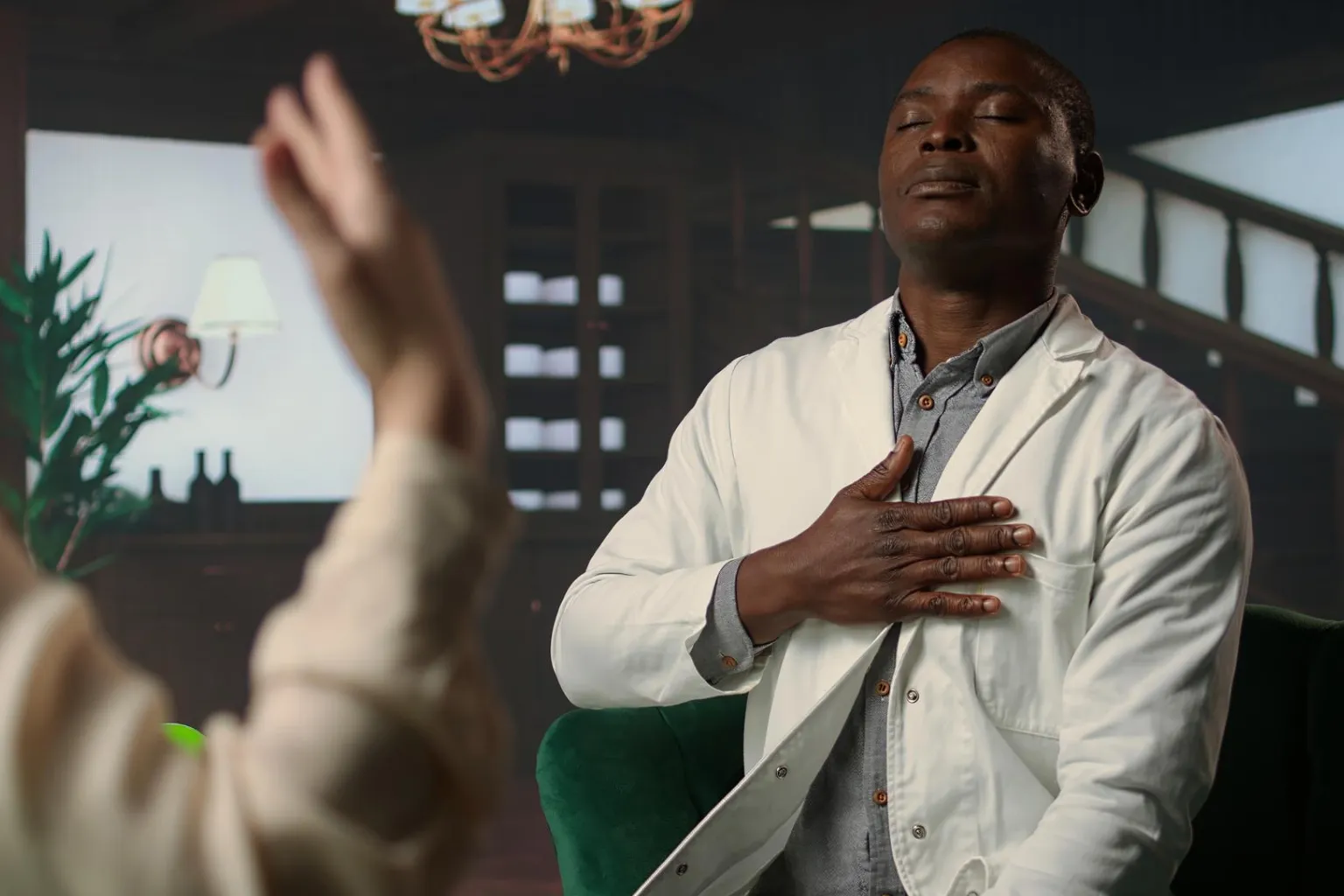
What if the strongest thing you ever did was admit you needed help?
In a recent ICBM session, The question was asked, “What does it mean to be a man?” A brother shared: “I thought being a man meant I had to figure everything out alone. Then, I realized I was just suffering alone.” That hit different but resonated with those in attendance. That included the sisters present who have watched the men in their lives, (fathers, brothers, uncles, friends) handle their business — alone. We’ve all been handed a blueprint for masculinity that equates strength with silence, leadership with isolation, and resilience with never showing pain. But here’s the truth that we’re uncovering together is that real strength isn’t about being unbreakable or alone — it’s about learning how to rebuild.
The Old Script: The traditional narrative tells us that sensitivity is weakness. That vulnerability is liability. That asking for support means you’re not built for leadership. So we learn to compartmentalize — be hard at work, harder on the streets, and hardest on ourselves, with judgment, giving us license to be judgmental with others. We become experts at wearing masks, switching codes, and carrying weight we were never meant to bear alone. But what does that cost us? Our relationships suffer because intimacy requires openness. Our mental health deteriorates because we’re running on fumes. Our communities fragment because we’re all trying to be islands.
The Rewrite: During our workshop discussions, we talk about the difference between being tough and being whole. One participant described it perfectly: “I used to think strength was being an immovable rock. Now I see it’s a bridge that connects me to my purpose, my people, and my truth.” This reframing isn’t about abandoning resilience. It’s about expanding what resilience actually means. It’s recognizing that:
- Setting boundaries are necessary to deter distractions
- Expressing emotion is essential in communicating with others
- Seeking community is a strategy to broaden personal influence
- Being present for noble connections builds stronger relationships
The Integration: The men who show up most powerfully in our sessions aren’t the ones who have it all figured out. They’re the ones willing to sit with discomfort, name their struggles, and do the work of integrating all parts of themselves — the empathetic and the strong, the wounded and the warrior. Being a Black man isn’t about having all the answers. It’s about creating spaces where others feel safe enough to ask questions. Real resilience isn’t about never falling. It’s about building a support system that helps you stand back up.
The Practice: So what does this look like in daily life? It’s checking in with your brothers (and sisters), not just checking up on them. It’s telling your partner “I’m struggling” instead of “I’m cool” or “I got this.” It’s recognizing that taking care of your mental health isn’t maintenance — it’s mission-critical. Twenty-four seven, three-sixty-five. It’s understanding that you can be gentle with your children and still teach them strength. You can acknowledge your father’s trauma and still hold him accountable. You can honor the resilience of your ancestors while refusing to repeat their pain.
The Truth: Redefining masculinity doesn’t mean losing strength. It means reclaiming it. It means deciding for yourself what kind of man you want to be — not based on survival tactics passed down through generations of trauma, but on the intentional life you’re building right now. Because the strongest Black men aren’t the ones who never bend. They’re the ones who know how to grow and begin to craft what has yet to exist.
 Date posted: November 28, 2025
 Author: Fredrick Bush